Lake Minnetonka Homes for Sale: Question 1: How Will You Use the Lake, what home is right for you?
Part 1 of 4 — The Insider's Guide to Buying on Lake Minnetonka By Vicki Peters | Wayzata Luxury Real Estate Specialist & Lake Minnetonka Resident
Quick answer: With 218 active Lake Minnetonka homes for sale as of spring 2026 — ranging from $1.7K to $50M, with an average listing price of $2.84M — buying on this lake is one of the most consequential real estate decisions in the Twin Cities metro. The single factor that determines whether you love your purchase or regret it isn't price per square foot. It's whether your home matches how you actually use the water.
*Pro tip: Use a realtor that actually lives on the lake currently, not one that did in the prior to 2000, too much has changed in homes and the actual lake.
There's a moment every serious Lake Minnetonka buyer reaches — usually somewhere between the third showing and the fifth sleepless night of scrolling — when the question changes. It stops being Can I afford a home on the lake? and becomes Which part of the lake is actually right for me?
That question deserves a real answer. And it's one most agents can't give you, because most agents don't live here.
I do. I've spent years guiding buyers to the right home on Lake Minnetonka. And the most important conversation we can have — before square footage, dock size, or price — is this: What are you actually going to do out there?
It sounds simple. It changes everything.
What Most Buyers Don't Realize About Lake Minnetonka
Lake Minnetonka is not one body of water. It is a labyrinth.
Spanning 14,000+ acres across nine cities with 125 miles of shoreline and 42 distinct bays, Minnetonka is a system of interconnected waterways — each with its own depth profile, water quality rating, boating culture, and regulatory status. The name comes from the Dakota Sioux language: mni tanka, meaning "great water." Great, and genuinely complex.
A home on Wayzata Bay and a home on Priests Bay are both on Lake Minnetonka. But they deliver completely different lake lives. A skilled angler who accidentally buys on a party-atmosphere main lake bay will be miserable within a summer. A wake-sport family who buys on a minimum-wake bay will feel landlocked. A view buyer on a high-traffic boating corridor will feel cheated of the peace they paid for.
The match between buyer and bay is the entire art of this market.
Understanding the 42 bays that make up Lake Minnetonka — and how the Lake Minnetonka Conservation District (LMCD) governs surface water use across them — is the foundation of smart buying here.
The Four Buyer Profiles on Lake Minnetonka
Most buyers fall into one of four use profiles. Here's what each one needs — and which bays deliver it. Will you ever swim in the lake or just look at it?
1. The Open-Water Boater and Cruiser, the recreational boater that explores all the lake
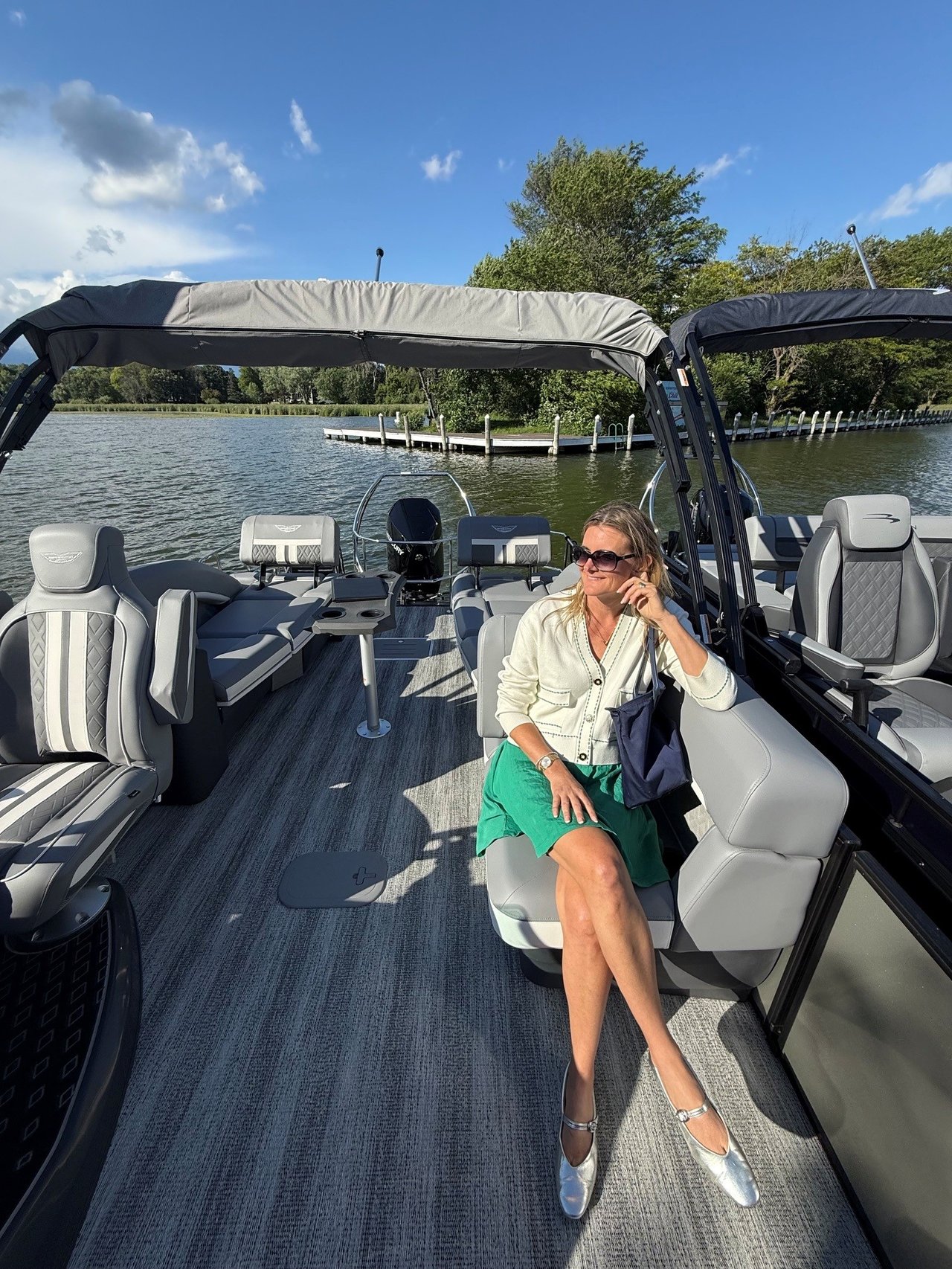
Who this is: Pontoons, bowriders, and the freedom to open up the throttle on a clear July afternoon. You want the lake to feel big.
What you need to know first — the LMCD rules that govern your boating life:
Since January 2023, all boats on Lake Minnetonka must maintain 5 mph or less within 300 feet of shore — doubled from the prior 150-foot buffer. All channels between bays are 5 mph minimum-wake zones. The open main lake carries a 40 mph daytime speed limit. Buy on a quiet inner bay without understanding the channel network and you may spend 15–20 minutes navigating wake restrictions before you reach open water every single time you leave the dock.
Best bays for open-water boaters:
Wayzata Bay is the flagship address for boaters. Covering 778 acres with 5.5 miles of shoreline, it sits at the heart of Lower Lake's widest open sections. Browns Bay, which adjoins Wayzata to the west, reaches approximately 40 feet in depth and connects seamlessly to the main lake. If you want to be underway and at speed within minutes of leaving the dock, this is where serious boaters buy. The Wayzata waterfront also delivers world-class dining, boutique shopping, and a walkable downtown — a rare combination of full lake access and town lifestyle.
West Arm Bay offers wide-open main lake access with full marina infrastructure close by. This is home to Rockvam Boat Yards, a full-service, family-operated marina offering storage, slipping, and maintenance — a material amenity for boaters who use their boat hard. West Arm Bay has shoreline in Mound, Spring Park, and Orono.
Crystal Bay earns a mention for its exceptional depth — at 115 feet, it is the deepest point on all of Lake Minnetonka — and its iconic views of the Lafayette Club and Noerenberg Memorial Gardens. Shoreline communities here include Orono and Minnetonka Beach, two of the most coveted addresses on the entire lake.
St. Louis Bay, near Orono and Minnetonka Beach, offers a less-celebrated but highly strategic combination: sheltered water protected from west and northwest storms, with a two-minute cruise to open Lower Lake and the Minnetonka Yacht Club. Local brokers often describe it as hidden-value territory — main lake access without the main lake price premium.
*You will love exploring small coves, bays, areas for hours and hours, you might want to jump in or not.
2. The Angler
Who this is: Early mornings, quiet water, a rod in the hand, and serious pursuit of walleye, musky, bass, and pike. Lake Minnetonka is one of Minnesota's premier trophy fisheries — a top largemouth bass destination statewide with strong populations of walleye, northern pike, muskellunge, and panfish throughout.
What you need to know first — the seasonal rhythm:
Spring (ice-out through early June): walleye and northern pike concentrate in shallow bays and near spawning areas. The Minnesota DNR regularly stocks walleye fingerlings in several Minnetonka bays to sustain the fishery. Summer: fish push to weed lines, drop-offs, and submerged structure in deeper water. Fall: the best musky window on the entire lake. Winter: ice fishing culture here is serious — shanty cities appear across the frozen surface each January.
Best bays for anglers:
Carson's Bay, near Deephaven on the lake's western side, is consistently cited among the top fishing destinations on Minnetonka. Bass, walleye, and northern pike are abundant. A quieter, sheltered alternative to the busier main-lake bays — and a genuine conservation community among its residents, keeping the water quality high and the atmosphere peaceful.
Gray's Bay, on the lake's eastern end, is a reliable walleye and bass producer and a historically productive fishing bay. The Minnehaha Creek Watershed District, which monitors water quality across the system, provides seasonal water quality data for each bay — worth reviewing before buying.
West Upper Lake ranks among Minnetonka's top fisheries, supporting walleye, northern pike, and largemouth bass, with active DNR stocking to maintain populations. Its B-rated water quality supports consistent recreational fishing.
Emerald Lake and Seton Lake, on the western side near Mound and Cook's Bay, are minimum-wake zones — which is exactly what makes them productive fisheries. Low boat traffic means undisturbed habitat, healthy weed structure, and fish that aren't educated out of biting. Seton Lake also serves as a navigable channel connecting Cook's Bay, Harrison's Bay, and Spring Park Bay, giving you access to the broader system without leaving your slip.
Black Lake, one of the lake's smallest sections near Spring Park and Mound, operates under a low-wake zone and has calm, sheltered conditions year-round. Properties here trend more affordable than Wayzata or Minnetonka Beach — making it a genuine value play for the fishing buyer who doesn't need open-water access.
Fishing buyer note: Minimum-wake bays are frequently the most undervalued on the lake. If the dock, the morning catch, and the loon call matter more to you than horsepower, you have significantly more inventory and price flexibility. See current waterfront listings in Mound and Spring Park.
*Pro tip: there are many secret spots on the lake to fish, use a fishing guide to learn or look for a group of boats near islands or drop offs
3. The Water Skier and Wake Sports Family
Who this is: A wake boat or ski boat is central to your lake life. You ski, tube, wakeboard, or run a slalom course regularly during the season.
What you need to know first — this is the use profile most disrupted by recent regulations:
As of 2023, the expanded 300-foot shore buffer has materially reduced the effective towing corridor on many parts of the lake. Multiple bays are designated Quiet Water Areas, where watercraft cannot exceed 5 mph under any conditions. Towing is prohibited in all minimum-wake zones and is only legal in the open sections of the Main Lake.
The LMCD's current rules for water skiing and towing on Lake Minnetonka:
- A dedicated observer (at least 12 years old; a rear-facing mirror does not qualify) must continuously watch the skier
- No more than three persons may be towed at one time
- Towing is prohibited from 30 minutes after sunset through sunrise
- Persons being towed must wear a Coast Guard-approved flotation device
- All towing must maintain at least 150 feet from docks, swim areas, anchored vessels, and swimmers
Best bays for water sports:
Lower Lake open sections — the widest, deepest, most open stretches of Lower Lake — are where water skiing and wake sports remain fully accessible. You need fetch: sustained open water to build speed and run a clean course. The main body of Lower Lake is where this happens on Minnetonka.
The Big Island area draws boaters for its open-water adjacency and active social scene. For wake sport families, proximity to the open main lake is the dominant purchase criterion — more important than bay prestige, view orientation, or even home size.
Honest advice for wake sport buyers: Do not purchase on a minimum-wake or quiet-water bay with the expectation that regulations will loosen. Based on the LMCD's regulatory trajectory, they are more likely to tighten. Be rigorous about confirming wake sport viability on any specific property before writing an offer. I verify this for every buyer client in this category — it's not something to trust the listing sheet on.
*Pro tip: many families find it difficult to live on the lake with smaller house sizes or driving to activities everyday takes longer to drive around the lake. You might consider deeded access for a more affordable option to get a larger home.
4. The View and Lifestyle Buyer — The Lake as Living Environment
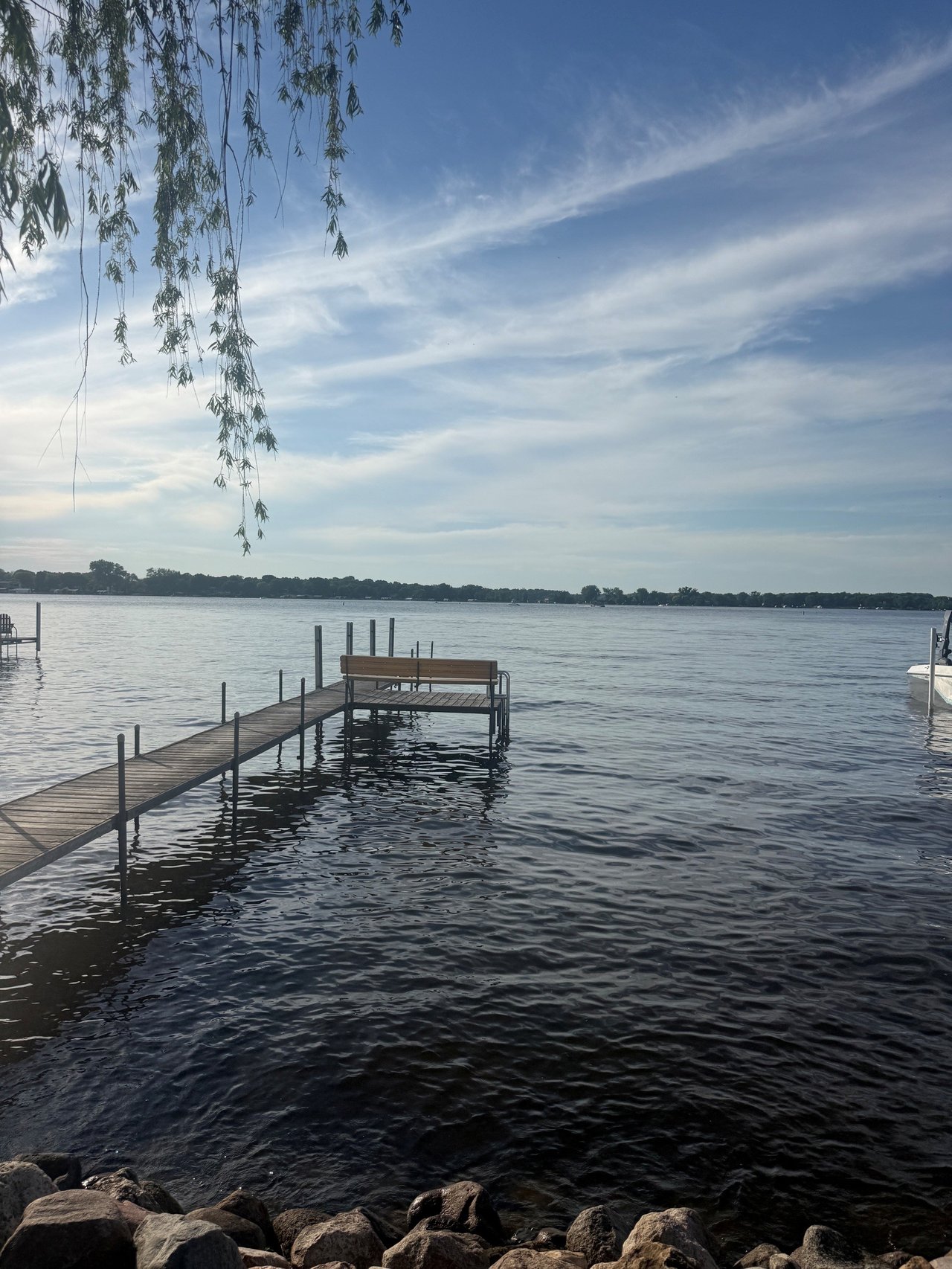
Who this is: You're buying Lake Minnetonka for what it looks like and what it feels like to live here, more than for what you do on it. The morning light on the water. Entertaining on the deck in August. The winter quiet and the ice forming in November. You may kayak occasionally, or take the pontoon out for a sunset cruise a few times a summer — but the lake is primarily an environment, not an activity. You LOVE to LOOK at the lake
This buyer profile is most common in the $3M–$10M+ range, where prestige of address and quality of view become the primary value drivers.
What to prioritize:
Shoreline orientation: West-facing shores deliver the defining Lake Minnetonka experience — afternoon sun on the water and the classic Minnesota summer sunset across open lake. East-facing shores offer protected morning light and calmer water in afternoon wind. This single factor — sun angle relative to your outdoor living spaces — is one of the first things I assess on any property.
Open versus protected water: If you're not running a high-speed boat, a slightly protected bay is a feature, not a limitation. Lower boat traffic means calmer water at your dock, less shoreline erosion, reduced dock maintenance cost, and a quieter ambient experience.
Best bays for view and lifestyle buyers:
Crystal Bay is arguably the most visually compelling bay on the entire lake. At 115 feet deep with crystal-clear water, views of the historic Lafayette Club across the water, and the lush context of Noerenberg Memorial Gardens on its shore, Crystal Bay properties sell on the strength of the setting as much as the structure. Homes here are among the most coveted on Minnetonka. See Crystal Bay listings.
Wayzata Bay is the flagship lifestyle address. Open-water views, direct walkability to downtown Wayzata (boutique shopping, acclaimed restaurants, Wayzata Beach and lakeside park), and an orientation that captures both morning and evening light — it is consistently the most-searched address on the lake for a reason. See Wayzata Bay listings.
Carson's Bay near Deephaven serves buyers who want privacy, natural beauty, and a quiet shoreline without sacrificing the Lake Minnetonka address. The community has a genuine conservation ethic — residents are organized around keeping the water quality and character of the bay intact. For buyers who want to feel like they're in an unspoiled natural setting rather than a boating corridor, Carson's Bay is a serious candidate.
Lafayette Bay, near Orono and Minnetonka Beach, is known for calm waters, moderate boat traffic, and quick access to open water — a combination that appeals to lifestyle buyers who want both peace and optionality. A short boat ride reaches historic downtown Excelsior or Wayzata.
Robinson's Bay, near Deephaven, offers mature tree canopy, deep-water shoreline, and a peaceful atmosphere with proximity to both Wayzata Bay and Browns Bay. It appeals to buyers who want a slightly quieter setting without sacrificing access to the lake's social core.
*If you want to view the lake but not get in it, why does the lakeshore matter? look for a bay you can afford
2026 Market Context: What You're Buying Into
The Lake Minnetonka waterfront market is performing from a position of structural scarcity. As of spring 2026, there are 218 active waterfront listings with an average asking price of $2.84 million and approximately $545 per square foot — based on an average property of 3.7 bedrooms, 4 bathrooms, and 4,536 square feet. The market spans from modest lake-access properties to estates exceeding $50 million.
The lake touches 14 communities — Wayzata, Orono, Deephaven, Excelsior, Mound, Shorewood, Minnetonka, Woodland, Minnetonka Beach, Greenwood, Tonka Bay, Spring Park, Minnetrista, and Tonka Bay — each with its own real estate character, school district, tax base, and lifestyle identity. Understanding which community and which bay aligns with your use profile, your commute, and your family's needs is a decision that takes local knowledge, not just a search filter.
This is where having the right agent changes the outcome.
The Question That Comes Before Every Other Question
Before lot size. Before dock footage. Before bedroom count or kitchen finish — the question that anchors every Lake Minnetonka purchase I guide is this: How will you actually spend your time on this water?
The right answer shapes every other decision. And it's a question worth spending real time on before you start touring properties.
I know these bays from years of living and working in this community — the water quality ratings, the seasonal patterns, the regulation changes that are coming, the dock access constraints, and the neighbor cultures on each bay. I know where the value is real, where the premium is justified, and where buyers are overpaying for a label rather than an experience.
Ready to start the conversation? Let's talk.
Frequently Asked Questions: Buying a Lake Minnetonka Home
What is the average price of a home on Lake Minnetonka in 2026? As of spring 2026, the average asking price for waterfront listings on Lake Minnetonka is approximately $2.84 million, with an average of $545 per square foot. Prices range from entry-level lake-access properties under $500K to trophy estates exceeding $50 million.
Which bay on Lake Minnetonka is best for fishing? Carson's Bay near Deephaven and Gray's Bay on the eastern end are consistently ranked among the top fishing bays. West Upper Lake, Emerald Lake, and Seton Lake are also productive — particularly for anglers who prefer minimum-wake, quiet-water environments. There are many secret areas, you can find boaters in clumps around 7am at the honey spots.
Can you water ski on Lake Minnetonka? Yes, but only in designated open-water areas of the Main Lake. As of 2023, the LMCD requires all boats to maintain 5 mph within 300 feet of shore, and several bays are designated Quiet Water Areas where towing is prohibited entirely. Wake sport buyers must verify open-water access before purchasing.
What is the deepest bay on Lake Minnetonka? Crystal Bay, with shoreline in Orono and Minnetonka Beach, is the deepest point on the lake at 115 feet. It is also considered one of the most scenic and coveted bay addresses on Lake Minnetonka.
What are the best communities to buy a home on Lake Minnetonka? It depends on lifestyle priorities. Wayzata offers the best combination of main-lake access, walkable downtown, and prestige. Orono and Deephaven offer privacy and estate-scale lots. Excelsior and Mound provide more accessible price points with strong community character. Each of the 14 lake communities has a distinct profile worth understanding before buying.
How many bays does Lake Minnetonka have? Lake Minnetonka has 42 distinct bays across 14,000+ acres and 125 miles of shoreline, making it one of the most complex recreational lakes in the Upper Midwest.
Vicki Peters 763-443-9084, raised 2 kids in the Wayzata school district and a resident that lives on Lake Minnetonka.